Greg Ehrbar

GREGOVISION@HOTMAIL.COM

  • GregOVision Blog
  • Home
  • About
  • Resume
  • Portfolio
  • Contact

WEST SIDE STORY DIDN'T HAVE TO GO SOUTH

December 16, 2021 by Greg Ehrbar

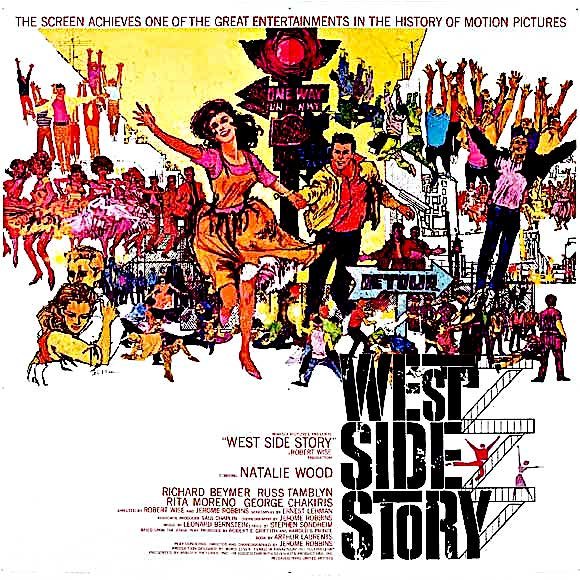
There are plenty of theories being discussed bout the underperformance of the new West Side Story in theaters. Few have pointed to the music as the problem, except for those based on ignorance of the score and the whole reason for the musical to begin with—unless those critiques themselves were designed as click bait and willfully engineered. More about social media specialists in a moment.

There are two more very glaring reasons: savvy accessibility of the original 1961 film from Warner and the continuing poor effectiveness of negative marketing. The answer: connection and partnership rather than isolation and critique. There is too much of that already, why attach more of it to a prospective ticket purchase of the public?

I don't think musicals are the problem, it's just the right film at the right time. They had to know going in that a remake of an eleven-Oscar winner was a tough sell so the Spielberg name alone was the "star" that might have been the draw.

Hollywood is not out of ideas, it doesn't want to hear them. Spreadsheets sell movies, TV shows and most every creative concept because of the high risks. Movie companies are all conglomerates and answer to shares. The fact is that 1961's West Side Story, like most movies that are remade, was a perennial hit in theatrical reissues as well as numerous home video releases. The soundtrack album was number one for many weeks. That was part of the challenge of selling a new one, but the irresistible urge to make a new one.

Then comes marketing. How do you convince people to see a new version of an acclaimed movie? Just like toothpaste and laundry detergent. New and improved.

Do you really think all the social media pointing out the flaws of a movie came only from concerned citizens? One of the most common jobs on the market today is social media marketing specialist. The flaws of the 1961 film were researched and became selling points, then they were peppered into threads and discussions. That is how it's done now without the mass media of yesterday.

The flaws of the earlier film are valid, for sure, but at the time the film was cutting edge and explosive in its treatment of the hot buttons of juvenile delinquency, racial and sexual issues, especially in a mainstream Technicolor musical. This was the same year that Flower Drum Song and Babes in Toyland were released.

That's why the dancing, singing and now-dated aspects of the 1961 version can be understood because it was 1961. No matter how it was "fixed" for today, it does not have the impact it did then. But spreadsheets cannot understand that.

There's one other major fact that hurt the new film: Warner was aggressive in making their original version as accessible as possible. In marketing, it's called "piggybacking." You let the other people spend the advertising money and your ancillary product sells too as a result. The 1961 West Side Story has never been easier to see than in 2021. Guess why? Most people saw it for the first time or saw it again. They either decided it could not be topped, wanted to wait for streaming, or didn't care.

Studios and corporations, if they must do remakes, should now find ways to connect rather than disparage the originals to sell reboots and re-imaginings or they are going to lose money because it's proving to be an ineffective strategy. It immediately puts a large segment on the defensive, which is the worst thing in advertising and throws away the opportunities to leverage the good points of the original. This negative based thinking is not working.

As for the forthcoming big-screen version of Wicked, I wish it well, it was a great show. But they waited so long, there have been too many imitative movies since with sympathetic villains.

Maybe the next attempts at remakes, reboots and reimaginings will take a more positive approach, like Jon Favreau did with his version of Wat Disney’s The Jungle Book. Rather than disparage or nitpick the original or those who love it, he said his was intended to “stand alongside” the classic. Know your audience—even better, know your audiences.
December 16, 2021 /Greg Ehrbar

The tippi point: why did "The Birds" GO bats?

June 27, 2021 by Greg Ehrbar

When I was a kid, I could not figure out the ending of Alfred Hitchcock’s The Birds, but I still thought it was a cool movie. I couldn’t figure out anything about what was going on in the movie at all.

Throughout the film, characters try to puzzle out why this is happening. Over the decades there have been many theories. The fact that nothing was spelled out and made easy may have been the whole beguiling point.

There was never a reason, and the movie really does not conclusively make it seem that all will ever be well. In the original novella, the birds continue their aggression and its more clear that they are not finished destroying, but the movie leaves it more open and is much more disturbing that way.

That is what separates Hitchcock’s The Birds from the same subject matter in the hands of another filmmaker, say the amusingly outlandish William Castle. The Birds is a true classic, continuously watched and discussed all these years later.

FUN FACT: Dal McKennon, who played the diner cook, was the voice of TV Gumby and Archie. He can be heard as Ben Franklin at The American Adventure in Epcot.

FUN FACT: Dal McKennon, who played the diner cook, was the voice of TV Gumby and Archie. He can be heard as Ben Franklin at The American Adventure in Epcot.

Hitchcock very well may have been drawn to the story's vague nature for that reason. There is a tendency for a lot of filmmakers and studios to overthink and overrule anything that requires too much audience introspection or imagination that is not provided by the film itself (“But what if ‘they’ don’t get it?’”).

One recent example is the fairly recent Paddington reboot, a very cute but literal. adaptation In the books, he can speak and no one questions it. That is part of the marvelous fantasy and charm. In the movie, there had to be a convoluted explanation created outside the book to explain away his ability to talk. It felt forced, as if it was added to prevent the slightest amount of confusion, yet a small child would simply say, "He can, just because."

It's often said that young audiences demand more “interaction,” but the term is overused, misinterpreted and administered in the form of gadgetry and gimmickry, which has never proven to last. When entertainment engages imagination, THAT is interaction.

June 27, 2021 /Greg Ehrbar
73 Greatest Movie Themes for Symphony Orchestra (Disc 2).jpg

Epic Orchestral Versions of Disney and Other FIlm Music

April 01, 2021 by Greg Ehrbar

Just discovered this and don’t know much about it except that it’s true concert-style orchestral music and I have not heard these arrangements before. Prague is where an enormous amount of production music is recorded for film, TV and theme parks, so these may very well be the same musicians you have heard hundreds of times. It does not sound cheap.

There are fresh suites of extensive songs and background themes that include:
Alice in Wonderland (1951); Peter Pan (1953) with Return to Neverland (2002); 101 Dalmatians (1961); The Aristocats (1970); Beauty and the Beast (1991), The Jungle Book (1967); The Little Mermaid (1989); Aladdin (1992) and The Return of Jafar (1994); Atlantis: The Lost Empire (2001); The Lion King (1994); Tom and Jerry (based on the Scott Bradley/Hanna/Barbera scores); a Cartoon Medley and dozens of famous themes from Chariots of Fire and Forrest Gump to Singin’ in the Rain and The Godfather.

It’s called 73 Greatest Themes for Symphony Orchestra.

April 01, 2021 /Greg Ehrbar
Screen Shot 2021-03-27 at 8.27.16 AM.png

"I Dream of Jeannie" Meets the Comics

March 27, 2021 by Greg Ehrbar

Barbara Eden starred in another show before Jeannie called How to Marry a Millionaire, a syndicated sitcom based on the Lauren Bacall/Betty Grable movie. In this episode, she turns out to be an expert on the comics and tests her knowledge on one of those $64.000 Answer type game shows. Lori Nelson and Merry Anders were billed above Ms. Eden in the series, which ran two seasons, but even here you can see the superb comedy skills that would later make her legendary on I Dream of Jeannie.

March 27, 2021 /Greg Ehrbar
Comment
The Sonny and Cher episode of The New Scooby-Doo Movies amongHanna and Barbera’s personal favorties

The Sonny and Cher episode of The New Scooby-Doo Movies amongHanna and Barbera’s personal favorties

SCOOBY-DOO, YOUR RAY IS BLU!

October 20, 2020 by Greg Ehrbar
Funland-05-Technology.jpg

Hanna-Barbera’s Scooby-Doo has been around for so many years, it’s easy to either forget or not realize, not only how big the cartoon was out of the gate, but what its first two series set in motion, even outside the confines of masked “It’s Mr. Greenway!” and confines of Those meddling kids!”

The first seasons of Scooby-Doo, Where Are You? laid the ground rules for the subsequent decades of movies and series, It’s interesting to see where it all began. The format, the catchphrases, the unmasking, so much of it started from the first episode, but that’s not all.

So did the musical score. Ted Nichols’ background music actually FIT the action in the first episode, then it was edited into cues and used endlessly in subsequent episodes. This was common practice, not only in Hanna-Barbera cartoons but even in live-action shows of the mid- to late 20th century. John Williams only wrote enough score for four episodes of Lost in Space (as well as both themes) but it was also edited into cues that were heard for the following three seasons. Other fine composers wrote music for additional episodes and were also shows that had no new scoring but relied completely on previous cues (the credits list no composer, just a music supervisor).

Scooby-Doo, Where Are You? is actually several different bundles of shows all together in the complete series Blu-ray. The second season has pop songs during the chase scenes, like Hanna-Barbara’s other current teen cartoon adventure, Josie and the Pussycats. The difference is that Shaggy, Fred, Velma, Daphne and Scooby do not have a band, the songs just play. The singer is studio vocalist Austin Roberts. He sings one of the songs also heard sung by guest star Davy Jones on The New Scooby-Doo Movies, “I Can Make You Happy.”

The remaining episodes were combined with Dynomutt, Dog Wonder when Scooby moved to ABC. The theme song is a variation on the Dynomutt theme and was also used in the syndication package, The Scooby-Doo Show.

The New Scooby-Doo Movies was a huge ratings winner for CBS (so much so that, after its second season, when the CBS executive waffled about renewing it, Joe Barbera and his business manager walked right across the street in New York to ABC, where Michael Eisner eagerly snapped up Scooby and the gang). One of its most important contributions was getting superheroes back on Saturday morning.

According to Hanna-Barbera’s World of Adventure by Michael Swanigan and Darrell MacNeil, after action shows had been swept from Saturday mornings for perceived excessive violence, Batman’s two appearances on The New Scooby-Doo Movies (as well as Superman and Wonder Woman—her first for TV—on Filmation’s Brady Kids) proved superheroes could be presented in a more peaceful manner.

Sure, the animation is limited, but check out the backgrounds. And perhaps the first few shows done as the Australian studios were getting used to the process were not as slick. You have never seen the color styling so vivid on broadcast TV as on Blu-ray. Some of it is overpowering. There were shortcuts, but there were a lot of skillful people behind these shows and they can still impress and entertain—and make you chuckle at the occasional cheesy grooviness.

Also of note is that Warner managed to get all but one of The New Scooby-Doo Movies in the Blu-ray set this time around. The only one missing now is the Addams Family, because of estate legal issues.

Scooby-Doo, Where Are You! and The New Scooby-Doo Movies are available on Blu-ray.

dd426dd-b72a3103-06ab-4057-b01d-caf47fbfaa5d.png
October 20, 2020 /Greg Ehrbar
3 Comments
whats-my-line.jpg

SAY! LET'S PLAY ALONG WITH THE "WHAT'S MY LINE?" PANEL

September 24, 2020 by Greg Ehrbar

Dot Records released an original soundtrack album, of all things, of the then-prime-time game show What’s My Line? This Dot 1958 LP record features the elegant stage actor (and former member of Orson Welles Mercury Theater group) Arlene Francis, the pioneering reporter (and controversial Kennedy assassination investigator) Dorothy Kilgallen, witty talk show host (and husband of Jayne Meadows, who was born in China) Steve Allen, publisher (including the beloved books of Dr. Seuss) Bennett Cerf and news legend John Daly (whose middle names was Charles).

Six famous people appeared as “mystery guests.” The panelists, blindfolded, had to guess who they were by asking elegant, witty questions—including some that became well-known to fans like, “Do you have a film or show currently appearing on Broadway or the New York area?” (since only the Smart Set would venture to the most glittering events).

This rare recording lets you guess along with the erudite panel but adds an especially rude buzzer over the answers. Keep in mind that this was 1958, so some of these people were much more “top of mind,” so to speak, than they may be to everyone now., but no less delightful, charming, and suitably elegant for the show.

The answers are listed in code below. Each letter is shifted ahead to its next letter. For example, “Greg Ehrbar” would be “Hsfh Fiscbs.” Just shift each letter to the one that comes before it in the alphabet and you’ll have the answer (if you haven’t already guessed).

And now, a word of our sponsor, the makers of Stopette…

ANSWERS
1. Sptbmjoe Svttfmm
2. Nbsjmzo Nbyxfmm
3. Gsfe Bmmfo
4. Qfufs Mbxgpse
5. Ebwf Hbsspxbz
6. Kvez Ipmmjebz
7. Kbzof Nfbepxt
8. Xjmmjbn Cfoejy

September 24, 2020 /Greg Ehrbar
1 Comment
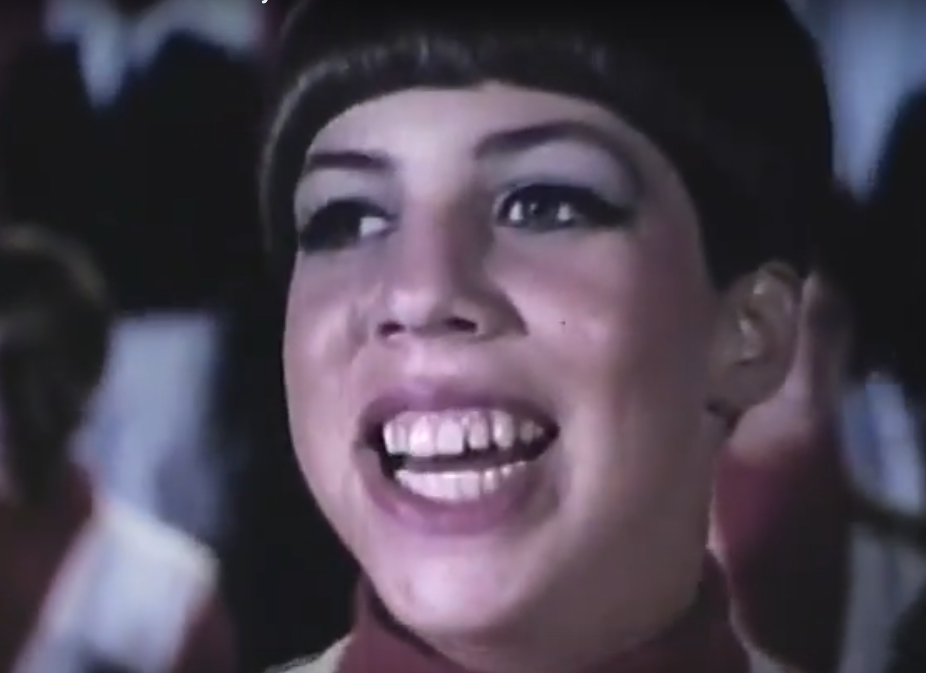
Vicki Lawrence in “Young Americans” (1967, Columbia Pictures).

Vicki Lawrence in “Young Americans” (1967, Columbia Pictures).

BEFORE "CAROL BURNETT" & "FANTASMIC," THERE WAS...

September 13, 2020 by Greg Ehrbar

Remember "KIds of the Kingdom" at the Disney Parks? This is the same sort of group you will see in this fascinati 1967 feature Young Americans, an Oscar-winning (sort of) documentary (sort of).

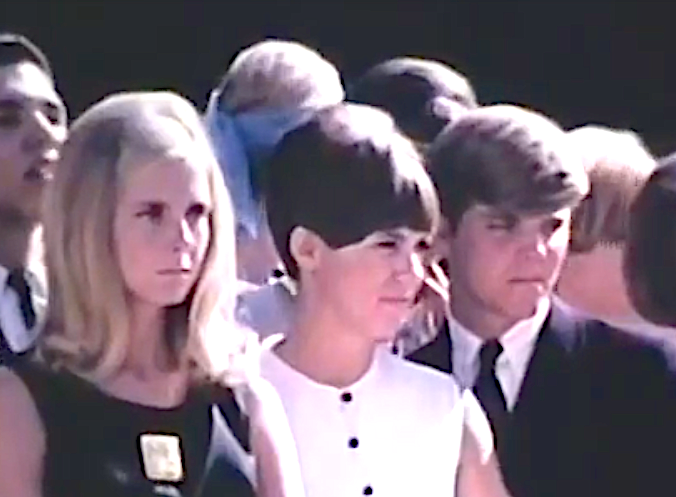
Watch for a young Vicki Lawrence in the group (pictured above and below, center). This was just before the premiere of The Carol Burnett Show. It is interesting to see how she is still the comical one of the group, and very Burnett-like even in this context.

Screen Shot 2020-09-12 at 9.34.31 PM.png

Another of these performers became a “Kid of the Kingdom” at Disneyland in California, and later the director of the major spectacular Fantasmic!--Barnette Ricci (she's the one who is given a pet hamster by a young fan).

Barnette Ricci,

Barnette Ricci,

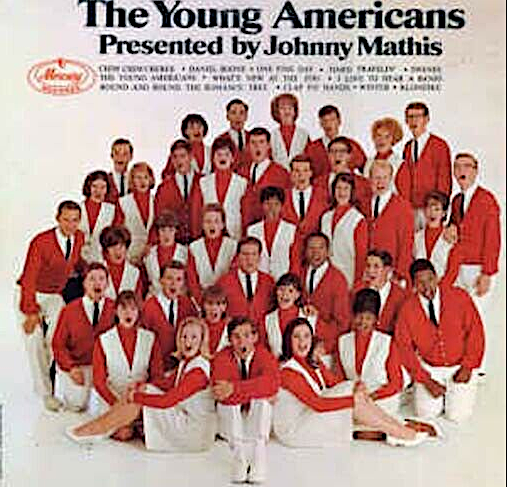
The group was established in 1962, recorded several albums, one with Johnny Mathis, and still exists today. There are children singing in the group whose parents were also Young American performers, touring the country and abroad.

Screen Shot 2020-09-12 at 9.23.01 PM.png

This "semi-documentary" won a 1969 Oscar but because of a technical rule (it had been screened in a theater in 1967) the Oscar was revoked. It’s a fascinating time capsule and surprisingly entertaining, though it’s more of a ‘60s idea of whimsical, Brady Bunch-y “semi-documentary” than what might be considered by-the-book documentary filmmaking. It was directed by Alexander Grasshoff, who was Oscar-nominated two other times for A Really Big Family and Journey to the Outer Limits.

September 13, 2020 /Greg Ehrbar
Comment
zoom.jpg

Recorded History: The Original "Zoom"

September 02, 2020 by Greg Ehrbar

Long before “zooming” meant talking to people on computer screens like The Jetsons crossed with The Brady Bunch, “Zoom” was about interaction of a different sort.

When PBS was still finding itself and shows like Sesame Street, The Electric Company and The French Chef with Julia Child were just getting on their feet (while other shows like The Great American Dream Machine and Hollywood Television Theater were allowing new and veteran talents to experiment), Boston public station WGBH introduced a show for, by and starring kids.

The producers rotated the cast out every six months. There were probably several reasons—to keep the show fresh, to allow for diversity, to give lots of kids a chance to be on the show, to keep the age level stable, etc. It most likely eliminated divas, instant stars and diva parents. However, it didn’t take long for viewers like us to become attached to cast members. My friends and I were partial to the lovely Nina,

I sent in several creative things including a play and lyrics to “The Cat Came Back,” a song they performed regularly. Each time a postcard would be sent with a photo and some lyrics or other material from the show, as kind of a thanks for trying. Lots of local shows had drawing contests and letter writing, but this was national and it was pretty exciting, even if your work was not selected. Plus it was a very entertaining mix of music, sketches (some not so good but funny because of it) and magazine-style segments. The kids were carefully chosen not to be overly perfect and instead be very natural.

Practically every show issued a cast album in those days. Zoom came up with two, plus an early “unofficial” one. The first was called “Playgrounds,” featured the first cast from the show, now replaced. This was an attempt to market a “Playground” club through TV mail order featuring them and hopefully keep their fame going.

The boxed set contained a poster, sticker and booklet. The back of the booklet offered forms to order more albums and to join the club with friends. The album is actually quite good and musically more elaborate than the subsequent two “official” Zoom LPs. The song “Rock Island Line” is not included on the other two albums even though it was performed on the TV show. There are a few new songs, folk tunes and groovy pop songs like “What the World Needs Now.” This group of kids could call themselves the original cast of Zoom because they were, even though they no longer were.

The next album was technically the first album, if you want to count only the ones with the Zoom logo and theme song. This one has all the most familiar tunes from within the program, including the one called “Send it to Zoom” with the zip code that we all memorized. The complete Alice in Wonderland “Mad Tea Party” musical sketch is even squeezed on to the disc.

The last Zoom album is great because it has songs that the most ardent Zoom fans will recognize, like “I Am a City Child’ (“I live on the tiptop floor…”) Also included are “Everybody Rejoice” from The Wiz and The Beatles’ “Octopus Garden,” which the Muppets also performed for Sesame Street. There was a Zoom “Best of the 70s” DVD, by the way that covers all the seasons and casts of the ‘70s versions. It’s now out of print.

Today there’s a new kind of “zoom.” It’s not a TV show, but it’s still interactive. Of course, today almost all kids have the option of making their own television channel, and get their creative ideas on a “TV show” of their own making. Still, there is something delightfully entertaining and charming about this series, and the albums capture a very special era of educational children’s records that combined eclectic musical styles—which is usually a good idea. Variety is a musical gift to the young.

September 02, 2020 /Greg Ehrbar
2 Comments
Screen Shot 2020-07-29 at 10.48.09 AM.png

Muppets' New Series is "New Now"

July 29, 2020 by Greg Ehrbar

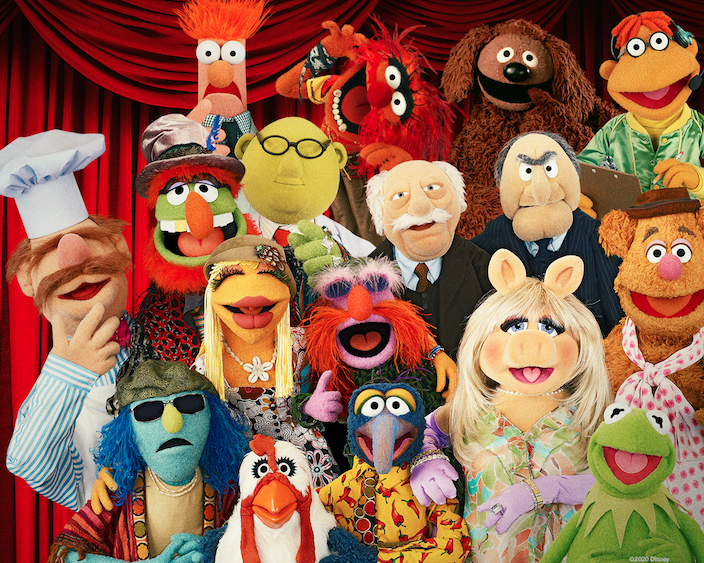
Miss Piggy is a Vlogger, Kermit is an online producer, Scooter is the tech supervisor and familiar media personalities abound in the latest entry in the Muppet video canon, this time in a six-episode sketch comedy on the Disney+ streaming series.

Produced by The Muppet Studio and Soapbox Films, this show replaces the vaudeville theater setting of the original Muppet Show with the PC and smartphone environment, but the combination of new and ongoing sketches is similar, missing are the musical moments. New characters include a “Joe the Legal Weasel" ( an inside joke as well as a nod to a famous Stan Freberg sketch), and a cooking show co-host with The Swedish Chef reminiscent of Julia Child who fawns over the guest chefs.

It’s a mixed bag, as any sketch comedy show is, but it does not have to compete with network prime time humor so the content is completely family-friendly. One claim that Disney+ can make is that it offers more options to keep parents less worried about what their kids of a wide age range are seeing, even between the shows (even a relatively wholesome commercial network can throw some pretty surprising ads at the breaks).

There is even some animation in the sketches with Bunsen and Beaker and an occasional appearance by a long-lost character from the first season of Saturday Night Live.

It’s cute and quite amusing, though it will be pretty dated as far at the “tech” gimmick goes, but it sure is nice to see old friends on the screen again. The creators of this show had no idea how much it would resound as a “Zoom” gathering of friends in this unexpected era. One might see it as a reassuring, lighthearted balm.

July 29, 2020 /Greg Ehrbar
Comment
Will Hutchins of Hey, Landlord with guest star Fred Willard

Will Hutchins of Hey, Landlord with guest star Fred Willard (1966).

Finding Garry Marshall's rewritten episodes from "Hey Landlord"

June 03, 2020 by Greg Ehrbar

MeTV published a nice article today about Laverne and Shirley. One of the items explains that Garry Marshall and his writing partner Jerry Belson re-used a script from his first sitcom—Hey Landlord!—for a Laverne and Shirley episode. There were a few more than one.

Hey Landlord! was unsuccessful compared to Marshall's later smashes, but it did run for two seasons on NBC from 1966 to t967. The MeTV article notes that the Hey Landlord! episode "Testing... One Two" was rewritten for Laverne and Shirley at "Guinea Pigs," in which Laverne is starved and Shirley is sleep deprived in a testing lab. The episode takes a different turn but the concept--and the scientist--is the same.

Another Laverne and Shirley episode rewritten from Hey Landlord! was "By the Sea, or at Least Rent It." It became "Malibu Mansion" in which a beach house becomes filled with uninvited guests. "The Dinner Who Came to Man" was adapted into "A Nun's Story." Three young ladies became one old school friend with a wild past who became a nun.

Cindy Williams and Rochelle Winter

Cindy Williams and Rochelle Winter

On Garry Marshall's beloved hit series Happy Days, Ron Howard's character promised tickets to a rock and roll concert from an old friend fronting the back in "Fish and the Fins." On the largely forgotten Hey Landlord!, Will Hutchins' lead does the same, except the friend is a football star (played by a young Fred Willard) in "The Big Fumble."

Fonzie donned a policeman’s uniform and talked his old gang out of a rumble in "Fonzie the Flatfoot," and Hey Landlord! costar Sandy Baron (later Jack Klompus of Seinfeld) did the same in "A Legend Dies."

Tony Randall, Marlyn Mason and Jack Klugman

Tony Randall, Marlyn Mason and Jack Klugman

Marshall and Belson even rewrote a Hey Landlord for their classic sitcom The Odd Couple. The memorable "Don't Believe in Roomers," in which the wonderful Marlyn Mason played a drifting free spirit who stayed with Felix and Oscar was a Hey Landlord! called "Same Time, Same Station, Same Girl."

Of course, stealing is wrong. A direct act of plagiarism is not condoned here, but the recycling scripts and concepts is nothing new, nor is it ever going to stop. The policy on Everybody Loves Raymond was that a script could be rewritten only if the episode was at least five years old. Listen to classic radio drama or comedy and the stories and scripting, though perhaps sometimes dated, might ring familiar.

There are only a limited amount of storylines in any genre. How many recent tentpole films could be traced—however inadvertently—back to The Twilight Zone, the original Batman or even Lost in Space? How much do we owe to Dickens, Shakespeare, Andersen and the Brothers Grimm? You be the judge.

Special thanks to Matt Mignone for clarification on this post.

HEY LANDLORD!.png
June 03, 2020 /Greg Ehrbar
Comment
4j8WcrHfVtsM58w2mANtxwLWUvU.jpg

WHY "CHITTY CHITTY BANG BANG" IS STILL COOL

May 24, 2020 by Greg Ehrbar

The 1968 Sherman Brothers musical extravaganza Chitty Chitty Bang Bang is actually more beloved internationally now than it has ever been. CCBB is essentially a British film based on a British book. The US did not embrace it in the theatrical release but television and video have given it a constant resurgence over the years, the same way as 1971’s Willy Wonka and the Chocolate Factory and Disney's Alice in Wonderland--both box office disappointments in their day but hugely loved today.

CCBB is really two movies in one, The first half is a straightforward family story about getting the car, the second half is a satire. Not everyone embraces satire, some find it silly or over the top. However, CCBB is one of the most skillful and razor-sharp satires ever filmed because it blends the comic with the tragic and makes strong statements about humanity through the story and the songs. The ending combines both movies. This kind of storytelling is indicative of many English traditions: Lewis Carroll, Monty Python, The Goons, even The Office. Roald Dahl's imprint is very evident in the searing way the story is told and uncompromising approach. He took no prisoners in his writing.

As to its pacing. It was made during a period when long, epic musicals and dramas were being produced that were very episodic. It was a tentpole system very much like today, except the Spielberg/Lucas format of regular action sequences had not been devised. Movies built gradually back then. Watch the original Love Bug and the film takes a while to get to the wacky comedy. Some might argue that it gives time to build mood and character but those raised with films moving a faster pace can find older films sometimes a bit plodding.

The fact that Chitty Chitty Bang Bang is almost always mentioned when citing important works in either the careers of Dick Van Dyke or the Sherman Brothers shows how much importance is now held. That would not have been the case in the past. It is a classic, it is not perfect, but true art is perfect in its imperfections.

Screen Shot 2020-05-24 at 2.51.29 PM.png
May 24, 2020 /Greg Ehrbar
Comment
sunset.jpg

Does "Dolittle" signal the end of tentpole movies--again?

April 02, 2020 by Greg Ehrbar

Surprise—Robert Downey, Jr.’s mega-fantasy Dolittle is actually pretty good. It’s available for streaming now, (with the DVD and Blu-ray version available April 7). There’s a good chances that young and old kids will get a kick out of seeing something entertaining that is not yet another retread, sequel or message laden element of an excel spreadsheet.

So why did most critics blast it? Why did it so glaringly “underperform?” Well, it’s far from a perfect film. Downey does a valiant job trying to create an original character (inspired by a real-life eccentric, much the way Johnny Depp benchmarked Jack Sparrow from Keith Richards). Downey’s dialect isn’t so much unfathomable as inaudible, but there is a handy subtitle setting for that on home systems.

However. Dolittle works better on the smaller scale of a home system. Perhaps the reason critics raved in disdain and audiences stayed away had less to do with the film—which also did not benefit by trading on familiar characters or franchise status—than something that might be better expressed by what Miss Piggy. once told People magazine: “My beauty is my curse.”

Every recent tentpole looks undeniably impressive. Elaborate action set-pieces occurred at specific intervals, increasing incrementally in size. Trouble is, audiences got to know all those intervals all too well. But it was becoming much ado about not very much. They would leave a theater and say, “Okay, now where did we park the car?”

When a film so bloated gets into the more intimate setting of a home, the trappings fall away and one is left with the performances and the story. In the case of Dolittle, Downey’s earnest appeal, the fine supporting players and the doctor’s task at hand (seeking an antidote for a poisoned young Queen Victoria) are made more direct and intimate. What is supposed to be epic still appears to be, but the unnecessary gingerbread is relegated to the limits of screen size and household distractions.

You just don’t need to throw that much money at the screen—or behind the camera—all the time. A solid TV movie on a modest budget or a classic film continues to prove just as powerful an enticement through streaming services as a glut of multi-million-dollar extravaganzas that pack on special effects, star power and gloss. The top-heavy budgets result in top-heavy attention to the high stakes—involving attentive, high-echelon examination, overthinking, overtesting, overshooting, etc. Conflicting schedules of big-name talent (presumed vital for marketing as well as box office) have sometimes affected story coherence when written around a star’s availability (Emma Thompson reportedly announced she will no longer appear in a tentpole film without a finished script). Special effects are added to help save films, or even have to be added later to make premiere dates.

None of this is news. It’s history. After the mammoth success of Mary Poppins, The Sound of Music and My Fair Lady, Hollywood was in a frenzied race to make expensive, lengthy musicals (not realizing that Poppins was not even as high budget as the other two). A select few of the lavish ones hit pay dirt—Oliver! won the Best Picture in 1968 and Funny Girl won Barbra Streisand the Best Actress Oscar the same year. Both films played for months in theaters after long, successful roadshow runs. Most of them went from reserved-seat engagements to bargain matinees. (There is a fine book called Road Show that documents the phenomenon).

Two of the biggest financial disasters in 1967-68 nearly broke 20th Century-Fox. One also starred Streisand. Hello, Dolly! was very expensive, very lengthy and by the Summer of Love, when The Beatles and the counterculture were taking hold, suddenly out of touch.

hsrrison.jpg

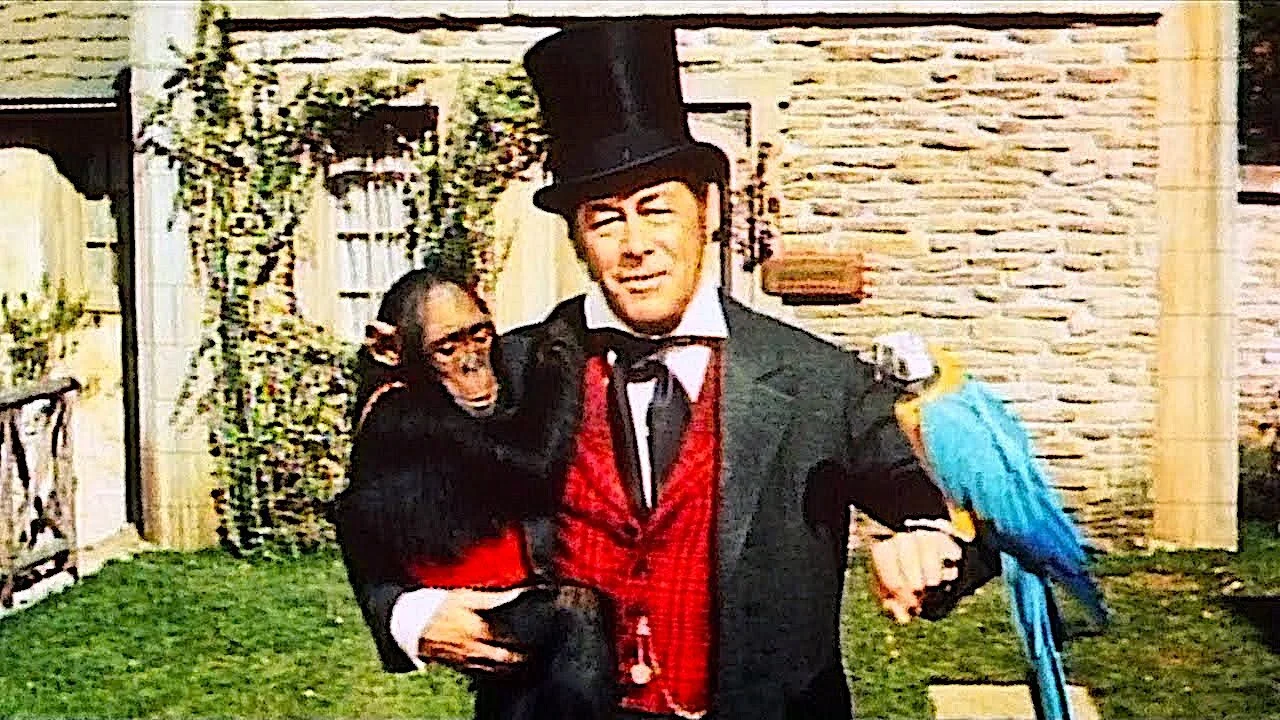
1967’s Doctor Dolittle—the original musical version starring Rex Harrison—was the other disappointment. The industry thought it could not miss because it had the star of My Fair Lady, was based on a famous children’s story and boasted an appealing score that was already getting noticed by entertainers like Sammy Davis, Jr.

According to the autobiography of songwriter/screenwriter Leslie Bricusse, Davis was offereded the option of singing one or two songs and decided to record them all, turning the session into a two-night event with family and friends. The album is still available. The score was performed by dozens of artists, but the soundtrack, which was shipped in anticipation of success and went gold just by virtue of advance sales, went into the bargain bins.

Doctor Dolittle won two Oscars, for the song “Talk to the Animals” and for special effects. The song enjoyed lots of airplay and merited several cover versions. The effects were on a grand scale. But 1967 simmered with pop culture clashes. There were those that felt that the song and score were old-school for the rock era and some effects were cheesy. (Critics were less than kind about the CG in 2020’a Dolittle as well.)

What is not widely known about 1967’s Doctor Dolittle is that it led to Star Wars becoming the pop culture institution that it is today. Fox invested so much in the merchandise, even to getting Harrison’s personal approval for the Dolittle doll, that they lost a fortune in “misfit toys” lying unwanted in warehouses. When George Lucas asked for Star Wars merchandising rights, they signed all of them over to the young director thinking they were of little value. Without this merchandise, Star Wars may not have become the “empire” that it is. Coincidentally, the company that now owns those merchandising rights also now owns the 1967 Doctor Dolittle film. It is not being streamed on its Disney+ service but it is streaming on amazon Prime.

For fans of musicals and Disney-style family entertainment of the mid-20th century, there is a lot to like in Doctor Dolittle. It inspired a musical on London’s West End and the classic Hollywood-style songs have taken on a life of their own. Just like the Downey version, it is far from the best of its genre, but it plays well on the small screen and you can always pause it and return later if you want to watch it in parts.

The theory with both is the same. A few years ago, it was proclaimed that there would be nothing but tentpole movies. Everything got bigger, even horror and comedy. Low-budget independent films were in short supply and became harder to find. The mid-range movie moved to television, mostly on streaming services—where some started winning major awards perhaps because they did not have to carry the same baggage as the tentpoles. You can forgive a film you watch on TV for being just “okay” and you can be thrilled if it is “very good.” But “very good” is no longer cutting it with splashy, techie, starry-eyed extravaganzas steeped in hype that stretch anticipation beyond reality.

murphy.jpg

There was another “Dolittle” between the 1967 and 2020 spectaculars. In 1998, a much less ambitious contemporary comedy starred Eddie Murphy, resulting in a box office hit and a sequel plus three non-Murphy direct-to-video films. The catch was that all of these films largely disposed of the original Hugh Lofting books and simply used the premise of talking to animals. This version is being streamed on Disney+. (There was also a 2019 children’s film, also with a contemporary setting, called Little Miss Dolittle, streaming on amazon Prime.)

Harrison’s Dolittle came along when the entertainment world was changing in 1967. There’s no denying that the business model is about to change again permanently in the coming months. As all three versions are available to see on various platforms, it’s kind of fun to share comparisons and conjectures. It’s ultimately up to you whether critics pilloried the newest Dolittle based on how it was, or because of what it was.

downey.png


April 02, 2020 /Greg Ehrbar
Comment

The genius of voice acting legend daws butler

March 30, 2020 by Greg Ehrbar

Daws Butler — voice of Yogi Bear, Huckleberry Hound, Quick Draw McGraw add hundreds more, as well as mentor to dozens of present day voice actors such as Nancy “Bart Simpson” Cartwright— could take a very ordinary line and transform it into a comedy gem. Listen to how Daws (as the British Delegate) creates a little masterpiece from thin air. We quote it at home all the time.

March 30, 2020 /Greg Ehrbar
Comment

Back when "Bewitched" was sponsored by food for the doggies

March 29, 2020 by Greg Ehrbar

"Bewitched," "F Troop" and The Double Life of Henry Phyfe" are highlighted in the back over of this record from Quaker Oats Company for Ken-L Ration promoting sponsorship of 1965-66 ABC-TV programming

March 29, 2020 /Greg Ehrbar
Comment
Dot Records.jpg

The Day I Met "CinderFella"

March 16, 2020 by Greg Ehrbar

Once upon a time, there was a Total Film-Maker who was directing a syndicated TV series called Super Force at a major studio not far from me. Super Force starred Ken Olandt, Larry B Scott and Patrick Macnee (John Steed of The Avengers) in a sci-fi crimefighting adventure. It was that took place the far-out futuristic world of-----oooooh--—-the year 2020.

A dear friend, also working at the studio on another project, called to ask me, “Do you want to meet Jerry Lewis?” Of course I did—but first I went home to get my copy of the CinderFella album for him to sign. This album is not the soundtrack, but a lull cast reenactment of the basic story with Lewis as narrator. The cast consists of Hollywood’s top studio singers, including Bill Lee (Christopher Plummer in The Sound of Music) and Loulie Jean Norman (the soprano heard in the original Star Trek theme). Walter Scharf (Willy Wonka and the Chocolate Factory, Mr. Magoo’s Christmas Carol) arranged and conducted a huge orchestra, just for this record, which was written, produced and directed by Lewis. Enclosed in the gatefold was a board game with a spinner, a tiara, music stang, story book with photos and conductor’s baton.

Arriving at the appointed time at Universal in Jerry Lewis’ office, I could hear Jerry Lewis’ voice coming from inside his office. He was very cordial and introduced me to another man there who was either his manager or agent. Carefully looking through the album’s contents, which were all part of his concept, he slid the vinyl record from the cover.

The LP was pressed in translucent, multicolored vinyl, unlike anything I had ever seen before or since—even with all the new Record Store Day special editions. The other gentleman in the room said, “Look! It’s in different colors.” Lewis replied, rather sharply, “Whadaya think, I didn’t know that? This was my idea to make the record this way!

He looked at me and said, “May I ask a favor? My wife has never seen this record and I would like to borrow it for a few hours to show it to her. Can I do that and get it back to you?”

I was not going to say no to Jerry Lewis—nor was I going to say, “Why don’t you just keep it, good sir? He also didn’t ask to buy or keep it. As my thanks for your gift of laughter!” I was so startled that he wanted to borrow it at all, none of that really occurred to me. Besides, he was being very much Jerry in charge of things and asked me where to send the record for pickup. Again, he was more than courteous and dutifully had the record returned with his signature (as well as a cool handwritten delivery note).

It’s always a delight to share a part of one’s life with someone who made it happen. Quite often I am surprised how few performers received copies of the works in which they participated. Jerry Lewis was genuinely happy to see this album again, many years after its making. Who knows if he saw it very often, if at all, after it was released in 1960? It’s no huge deal in the long range of things, but it’s a nice thing to have been able to do.

And CinderFella really is quite a lavish, unique album, especially considering it was made entirely for records at a considerable budget.. A little gem from the Lewis oeuvre.

Enjoy!

March 16, 2020 /Greg Ehrbar
2 Comments
Screen Shot 2020-03-06 at 11.53.05 AM.png

MOVIE REVIEW: WHAT "ONWARD" SAYS AND (MAGICALLY) DOESN'T SAY

March 06, 2020 by Greg Ehrbar

Disney/Pixar’s Onward has a title that doesn’t do it justice (it refers to a shift setting on the brothers’ van) and trailers cannot. No throwaway commercial can capture the journey unless you take it with these engaging characters. A fantasy-comedy-adventure-buddy romp. Onward is on the same level as Finding Nemo and the original Toy Story films (when Woody had an owner who wanted him and Buzz wasn’t a one-dimensional minor character), Onward has the qualities Pixar learned from early Disney storytelling that they adapted into modern animation. I did not go in expecting all of that, but was pleasantly surprised. I was also moved to tears.

I did not lose my father at a young age like the two protagonists (and director Dan Scanlon), but he is gone now (and lives on in my heart (so Coco is a personal Pixar favorite). We were close. He taught me a love of music and records. These were my dad’s gifts to me, the equivalent of magic and wizardry in this film. So I was certainly moved. But even thus primed for being verklempt, it was clear that the entire Onward team at motivated to make this film keep its focus to the director’s vision. There was not the more common effect lately one senses from family films, that the team was tasked with fulfilling a series of initiatives, to be checked off a series of lists, much as Ian (voice of Tom Holland) does throughout the film.

There was no smirking arrogance in any of these characters, no hands-on-hips with that trite “look at how confident I am” stance, no cross-armed assumption of audience charisma (though I have not seen all the promo art or merchandise of course). What was evident was humility. It’s getting hard to route for the animated equivalent of “the head cheerleader” and “the top quarterback” with everything going for them, or conversely see another under-the-top loser improbably become an over-the-top winner amid cheering onlookers, both formulas symptomatic of recent animated (and some live-action) features. Every character in this movie is believable. They all work for their respective fates.

Pete Doctor reportedly encouraged his people to look into their hearts and pasts for their stories. It worked for Charles M. Schulz. Hey, even Walt Disney’s past was fodder for aspects of his films. Carl Reiner called these aspects “realies,” the real-life stories and situations that ring true.

Onward was also surprising because it was not weighed down by leaden pop social messages of late. No metaphoric granite fingers pointed at the theater audience, making sure they were clear on what was being ever-so-clearly stated anyway, even if we got it already. (We get it! We agree! Dim the headlights!) The theme of Onward was love and acceptance. It was inherent in the strong writing—a more effective and powerful form of messaging, much the way Zootopia let the story lightly lift it up rather than iron message anvils drop it down. As in Aesop’s “The Wind and the the Sun,” you beam rather than blow. Heavyhandedness repels rather than inspires.

And Onward does inspire. And it reassures us that Pete Docter’s Pixar is off to a great, smart start. There is a lot of talk in this movie about the importance of not letting shiny new techie objects of convenience completely replace and destroy the essential—and relevant—magic which ultimately triumphs.

This may be the most obvious metaphor in the whole film. After all, recent research has just proven that Disney+ subscribers have overwhelmingly chosen to watch classic Disney over all the newest programming and franchises. The good “magic” lasts and remains relevant for generations. Somehow it shines through. This is one film that will be watched for a very long time as well. (I can’t speak yet for the sequels, though I’d love to see these characters just a little more—but then please stop!)

March 06, 2020 /Greg Ehrbar
disney, pixar, disney/pixar, onward, chris pratt, tom holland, animation, cartoons, animated features, film reviews, rotten tomatoes, pixaronward
Comment
Screen Shot 2020-01-20 at 6.16.24 PM.png

TIME TRAVEL WITH ANNETTE

January 20, 2020 by Greg Ehrbar

Here’s a rare treat: a 1985 video tour of Central Florida hosted by beloved Disney Legend Annette Funicello. She describes a Walt Disney World with only two oarks but still a River Country and Discovery Island. Long gone theme parks like Circus World are also included. It’s a Central Florida that still exists in some ways but is also much changed. A time capsule indeed!

January 20, 2020 /Greg Ehrbar
Annette Funicello, disney world, Walt Disney World, 'Central Florida, lost attractions, sea world, circus world, disneovery island, river country, magic kingdom, epcot, mickey mouse club, disney legend
Comment
LIFE WITH LUCY Complete Series.png

"Life With Lucy" on DVD: Is it Right for You?

October 12, 2019 by Greg Ehrbar

Ask your doctor, or just read this.

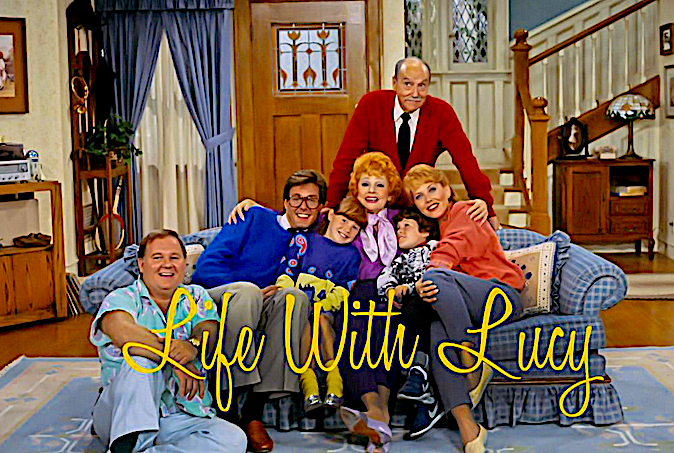
Life with Lucy was savaged by the critics after getting what was probably too much of a buildup before its first episode even aired. It was verrrrrry big news that The First Lady of Television was doing a new series in the era of The Golden Girls and Cheers. The expectations were set high, after all, this was Lucille Ball. Forget the fact that none of her previous comebacks to TV ever pleased audiences as completely as the original I Love Lucy.

Life With Lucy turned out to be an ABC ”TGIF”-type confection along the lines of Full House and Family Matters inasmuch as this was never going to be as bawdy as Golden Girls (that was not Lucy’s style), nor was it going to crackle with Frasier wit. It was going to be grandmother Lucy and grandpa Gale Gordon.

If you’ve always loved these two, this is for you. If you can forgive human beings for becoming old, and applaud their spirit at such an advanced age, there you go. Ball and Gordon are the consummate TV pros of all time and this was their last fling before the TV public. They may have slowed, but the power of their talent had not dimmed. The best scenes are the smaller, more intimate comedy bits, when they’re trying to do something simple that gets out of hand, like using “Wacky Glue.” Their presence on this series reminds one of how much both are dearly missed.

It’s also nice to see Lucy play to her senior years as a loving grandma rather than than make her fake a much younger age. Because Ball’s biggest success came after she passed the age of forty, she was always older than the sitcom character she played (this was also true of her lead role in the Broadway show Wildcat). Prepare yourself for lots of audience “awwws” for the cute kid moments, but Ball also does some nice work with them, as well as with her teevee daughter and son-in-law, played by Ann Dusenberry and Larry Anderson, whose talents were never given a chance to shine because the show didn’t last long enough (it was much easier for Donovan Scott, in the “funny guy” role, to get more opportunities).

ABC cancelled Life with Lucy before all thirteen episodes got a chance to air. One opinion might be that it wasn’t worth the effort, another might be that it might have helped save it—as many shows have gained audiences over summer reruns (and Lucy is the Queen of Reruns).

Now the the entire series is a complete rerun, out of the context of 1986 without other surrounding shows and tastes for contrast and comparison, suddenly it falls into The Lucy Canon alongside The Lucy Show and Here’s Lucy. It might has well have been made in 1970, really, and it doesn’t matter anymore. Just enjoy it if you want to see the episodes that were rarely seen by the public before (the back-payment cost of which must have been considerable, perhaps explaining the relatively high DVD price).

And don’t forget all those other classic TV performers who guest starred, like Audrey Meadows, Peter Graves John Ritter and Dave Madden, as well as character actors Dena Deitrich, Reva Rose and many others . And Eydie Gorme belting out the theme song.

One suggestion: start with the second episode with John Ritter and save the pilot for much later. The pilot is extremely broad (not that any Lucy episode is Proust) with too much of “everything” and may be what put some people off the series in the past. There is a marked difference between the pilot and the other twelve shows.

Amazon has Life with Lucy: the Complete Series here. The bonus features are a three part Hour Magazine interview with Ball and Gordon, a perky Entertainment Tonight segment and two short ABC promos. That’s above average for CBS Video, which sometimes adds no extras.

October 12, 2019 /Greg Ehrbar
Lucille Ball, I Love Lucy, Life with Lucy, The Lucy Show, John Ritter
1 Comment
Screen Shot 2019-09-26 at 9.41.13 AM.png

Jimmy Nelson: A life well-lived

September 26, 2019 by Greg Ehrbar

Mark Evanier recommended this tribute to the recently passed ventriloquist Jimmy Nelson. I have several of his records.

The most striking part is this: "Nelson was a legend but refused to act like one. As with most communities, the “ventriloquism community” also has an elite comprised of both the famous and the institutionally powerful. Nelson was known for encouraging people (even if they were not in the community’s elite) who want to keep the old art alive. He was never into exclusion, ego games, glad-handing or cliques."

That is a life well lived. If you have ever wondered what more you could have done with your life but you've ALWAYS put people first, you've made it. That's the way my father was. To all the "legends" who fall into the "honor your betters" category (and I'm not talking about ventriloquists, never met one), who have forgotten who they really are, well, deaf ears I guess.

The main thing is that those of you, no matter what your role in life, remember that Jimmy Nelson may not be the biggest household name in the world, but like Robie Lester and many of entertainment's other lesser-known greats, they had lives well lived and we each get only one.

You matter if you've made others matter and not just yourself.

Screen Shot 2019-09-26 at 9.40.56 AM.png
September 26, 2019 /Greg Ehrbar
Comment
Screen Shot 2019-03-29 at 10.23.02 PM.png

ALBUM REVIEW: Walt Disney's Johnny Tremain Soundtrack

March 30, 2019 by Greg Ehrbar

The 1957 Disney feature Johnny Tremain was based on a Newbery Award-winning book by Esther Forbes that many of us read in school, a fictional story that placed young people in the midst of the Revolutionary war and its participants. Walt Disney acquired the book for his television show, but the production became more elaborate and it was expanded into a feature film. It’s notable for the teenage appearance of Luana Patten, who with Bobby Driscoll, was among the first contracted players at the studio. Also in a co-starring role is Richard Beymer, who was soon to appear in The Diary of Anne Frank and then West Side Story. Playing Johnny was actor Hal Stalmaster, whose older brother was famed casting director Lynn Stalmaster. Hal reportedly did not get the role through nepotism. According to Hal, older brother Lynn thought he “was too young to start acting and besides, he didn't think I could act!"

While there was a score LP for the 1957 Disney film, that album contained studio versions of music selections from the film along with some vocals made for records. It only took up one side of the disc, with patriotic songs from other Disneyland records on side two.

The original 1957 Disneyland Records LP

The original 1957 Disneyland Records LP

This year, seemingly out of nowhere, Intrada Records partnered with Walt Disney Records to bring George Bruns’ Johnny Tremain soundtrack music to disc for the first time, PLUS the Tremain material from the Disneyland vinyl album as well. You get the song “Liberty Tree” as heard in the film, plus the album version sung by an uncredited Bill Lee (The Sound of Music, South Pacific), who also sings the title song.

Few George Bruns scores from live action Disney films have been commercially released, though his music for such animated features as Sleeping Beauty, The Jungle Book and more recently thanks to the Legacy Collection, Robin Hood and The Aristocats. That alone makes this CD worth having, and advisedly fast, as these sort of things sell out

Available directly from Intrada here.

Screen Shot 2019-03-29 at 10.17.46 PM.png
March 30, 2019 /Greg Ehrbar
1 Comment
  • Newer
  • Older