THE MAKING OF “SCROOGE” (1970) Part 2 of 6: ALBERT Finney Said No?!
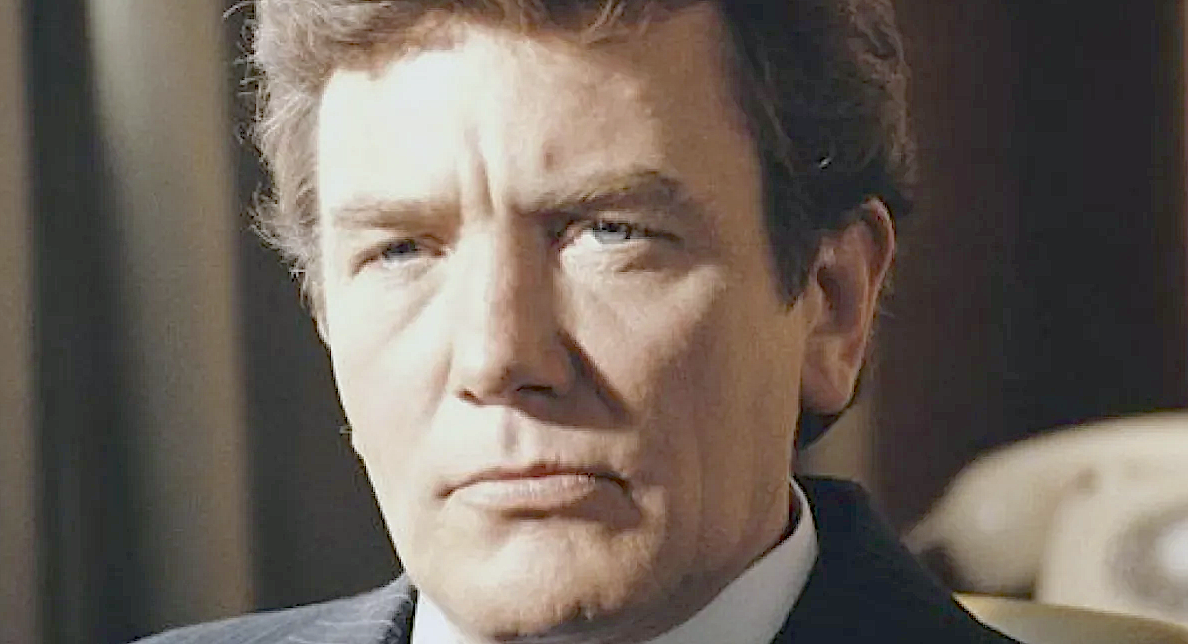
Director Ronald Neame was eager to come on board, but the casting was critical. He learned that Bricusse had already asked actor Albert Finney (Tom Jones), but Finney had turned down the part without having read the script. It was vital to have a lead actor who could play both the young and old versions of Ebenezer Scrooge, so Neame offered the role to Richard Harris, who accepted. But six weeks before cameras were to roll on Scrooge, Harris found himself detained by the film he was working on. That production had run into such desperate problems, Harris himself had taken over as director.
Despite having no star, Neame forged ahead and hired production designer Terence (Terry) Marsh, who had won an Oscar for his work on Oliver! Marsh designed a composite of Victorian London at Shepperton Studios. Interviewed in Neame’s book, Marsh recounted, “Shepperton was the biggest stage in use in England at the time. In order for it not to look like a set, I wanted to slope the street so the houses would have steps up to them, railings [and] different levels. This was much more expensive to do. As it was Christmas, the ground had to be covered in snow. [We used] some firefighter’s foam and mostly Epsom salts because it has such a nice sparkle.” (During production, the Epsom salts formed a fine mist which the actors inhaled, resulting in occasional bouts with the laxative properties of the substance.)
It took a team of skilled craftspeople three months to build the sets. Every detail of the London set was authentic. Antique toys, some over a century old, were used for the toy shop scenes. On the fantastic side, there was also an elaborate, surreal representation of hell.
Oswald (Ossie) Morris, who had also received an Oscar nomination for Oliver! was hired as Director of Photography, while choreographer Paddy Stone (who would also appear in the film as the Ghost of Christmas Yet to Come) began work with fifty dancers and singers. “So many musicals are staged as though through a proscenium arch,” Neame explained,” but I wanted to move 360O around the performers. It’s an advantage film has over theater.” The result was a kinetic opening sequence in which Scrooge goes about his money collections as viewers meet the townsfolk, to the tune of “Father Christmas” and “I Hate People.” This dynamic use of musical storytelling, only possible in film, predated sequences in musical features such as the “Belle” opening production number in Disney’s Beauty and the Beast (1991).
“It's kind of a family,” said Bricusse of these creative talents. “There's a nucleus of British cinematographers and designers who interchange work together. I’ve been able to work with most of them over the years and also a lot of the older technicians. Ronnie had been working with them as well. David Lean and others like him were involved with a lot of the same people in films like Great Expectations.”
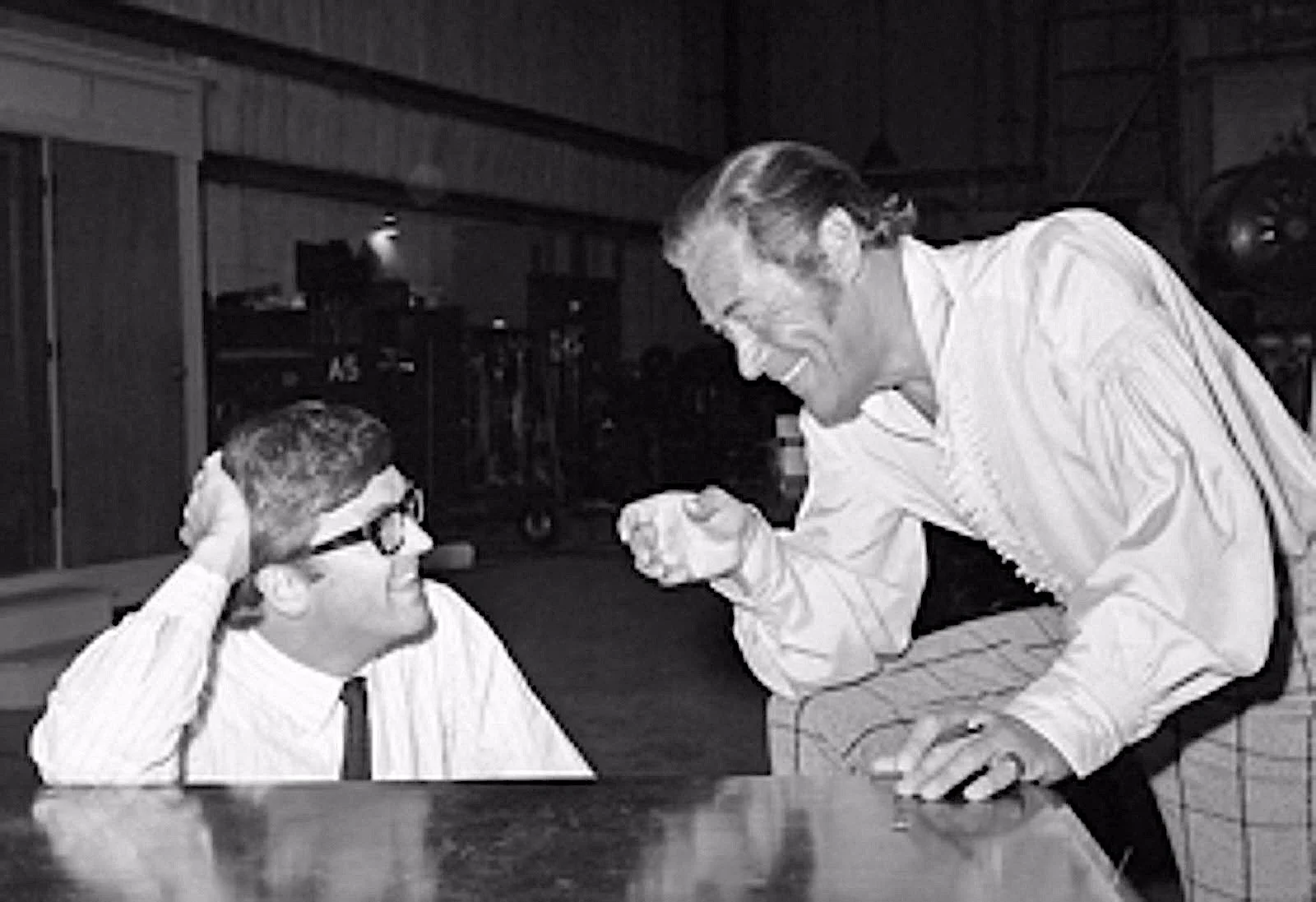
Composer/lyricist Leslie Bricusse and Rex Harrison working on the music for “Doctor Dolittle” (1967). The film won an Oscar for the song, “Talk to the Animals.”
All of this preproduction work was proceeding, yet the film still had no lead. It was critical to find a “name” actor that would be acceptable to American financiers. Rex Harrison was recommended. Harrison was interested, Neame agreed, and Harrison signed on December 12, 1969. Neame also cast actors with whom he had worked with in the past, including Sir Alec Guinness, Dame Edith Evans, Gordon Jackson and Kay Walsh.
Actor Michael Medwin’s acceptance of the role of Scrooge’s nephew Fred proved fateful. Medwin had formed the production company Memorial Enterprises with Albert Finney a few years prior. After Medwin was cast, Finney picked up Bricusse’s script at the company office, read it, and wanted to play Scrooge after all. (In his autobiography, Bricusse recalls the conversion of Finney as a simple dinner meeting with Finney and his fiancée Anouk Aimee in which Finney took the script and changed his mind within 24 hours.)
Now Neame was in a bind with two stars for the same role. Finney was his and the producers’ first choice, yet Harrison had been signed. “Dammit, it’s my fault,” Finney said. “If anything changes, I’d still love to do it.”
At the time, Harrison was performing in a stage play called The Lionel Touch in the West End of London (playing an aging hippie). The last two weeks of the play’s run would have overlapped with the start of Scrooge’s principal photography. Originally when Harrison signed for Scrooge, Neame had offered to buy out the last two weeks of Harrison’s contract. Now that Neame had Finney, he contacted Harrison and said that he and the producers could not afford it. So Harrison was out and Finney was in. “I’m afraid we behaved rather badly,” he admitted.
Alec Guiness in … oh, you know what.
Alec Guinness had also initially refused the role of Marley’s Ghost. “I didn’t want to do Scrooge, but Ronnie [Neame] can be very persuasive,” Guinness recounted in Neame’s book. “I accepted because it was only going to be a short bit of work and I had nothing particular to do at the time.” In hindsight, Guinness probably wished he had passed on the role, as the harness required for him to fly (especially during his song “See the Phantoms”), was uncomfortable and ended up giving Guinness a double hernia, which required surgery. He never mentioned this to Neame, but ironically Neame himself was diagnosed with a hernia after production wrapped and ended up across the hall from Guinness in the same nursing home during recovery. “The postoperative days were so painful we couldn’t laugh at the absurd circumstances in which life had placed us,” Neame wrote.
COMING UP NEXT: Making faces and soundtrack albums