THE MAKING OF "SCROOGE" (1970), PART 3 OF 6: TO SYNC OR NOT TO SYNC
The cast of Scrooge was blessed with some of the finest actors of the U.K. stage and screen, most of them immediately known to British audiences, but also familiar to Americans, like Kenneth More (The Guns of Navarone, The Slipper and The Rose) as The Ghost of Christmas Present; Roy Kinnear (Veruca Salt’s father in Willy Wonka and the Chocolate Factory) as a charity gentleman and Gordon Jackson (Hudson on Upstairs Downstairs) as a party guest.
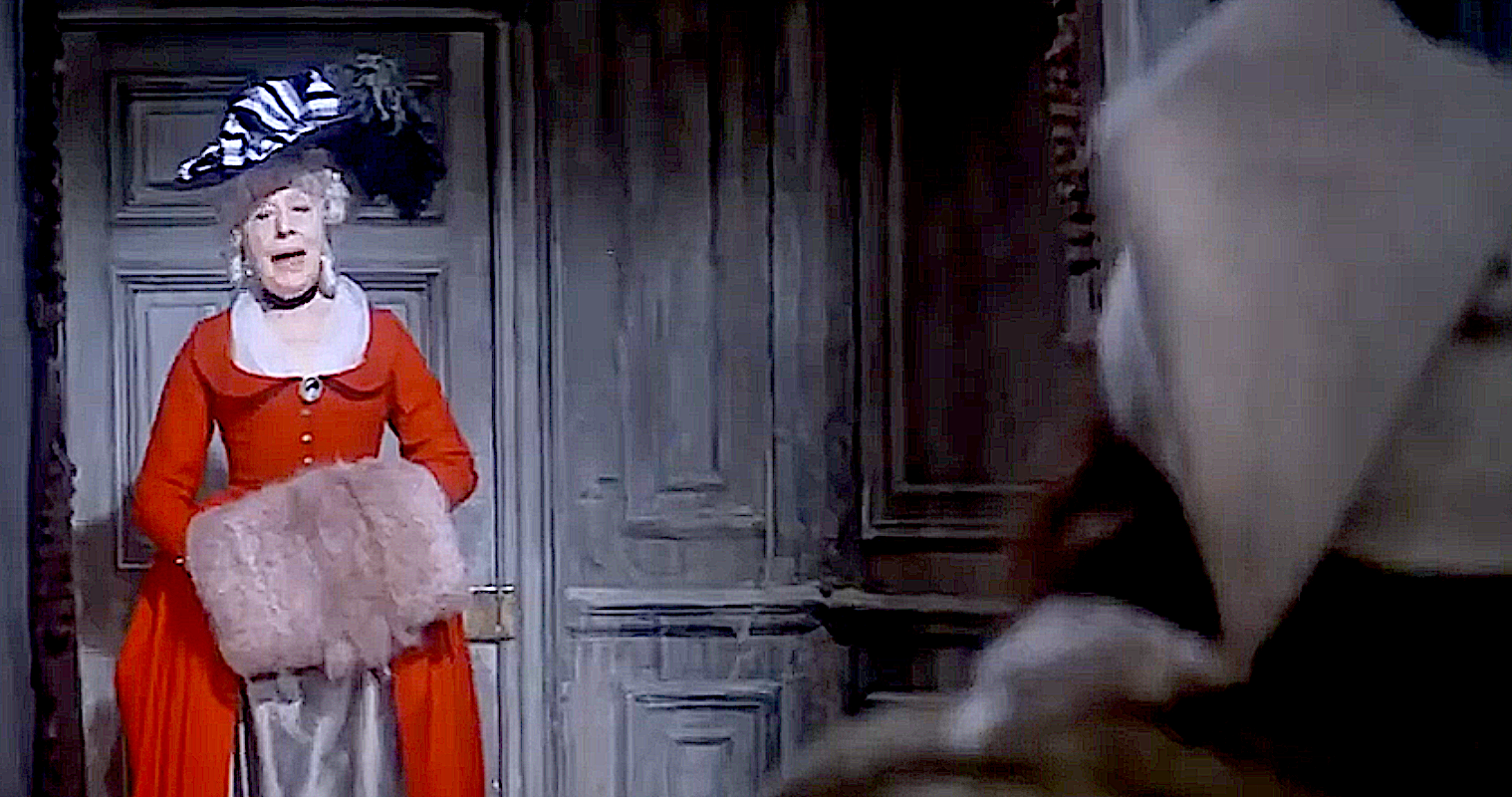
Dame Edith Evans’ scene-stealing role as The Ghost of Christmas Past, seen as a proper Victorian lady, has one of the best lines in the film. When Scrooge remarks that she doesn’t look like a ghost, she replies with a crisp “Thank you.” According to scenarist Bricusse, this ghost has an identity unique to this adaptation, though it is never mentioned in the film. He believes that it is “his older sister, who he looked to for guidance as a young man. That’s why it’s sad because he's lost his sister and then he finds young Isabel and loses her too.”
Laurence Naismith, who played Fezziwig, also had a Broadway Christmas musical on his resume: playing Kris Kringle in Here’s Love, Meredith Willson’s adaptation of Miracle on 34th Street—and sharp-eyed Fawlty Towers fans will recognize Mrs. Fezziwig played by Kay Walsh, to whom Basil Fawlty was unable to serve a duck dinner on “Gourmet Night.” Rounding out the leading cast were David Collings as Bob Cratchit; Suzanne Neve as Isabel; “Ricky” Beaumont as Tiny Tim. Michael Medwin, playing Scrooge’s nephew Fred, was in reality 13 years older than his on-screen “uncle.”
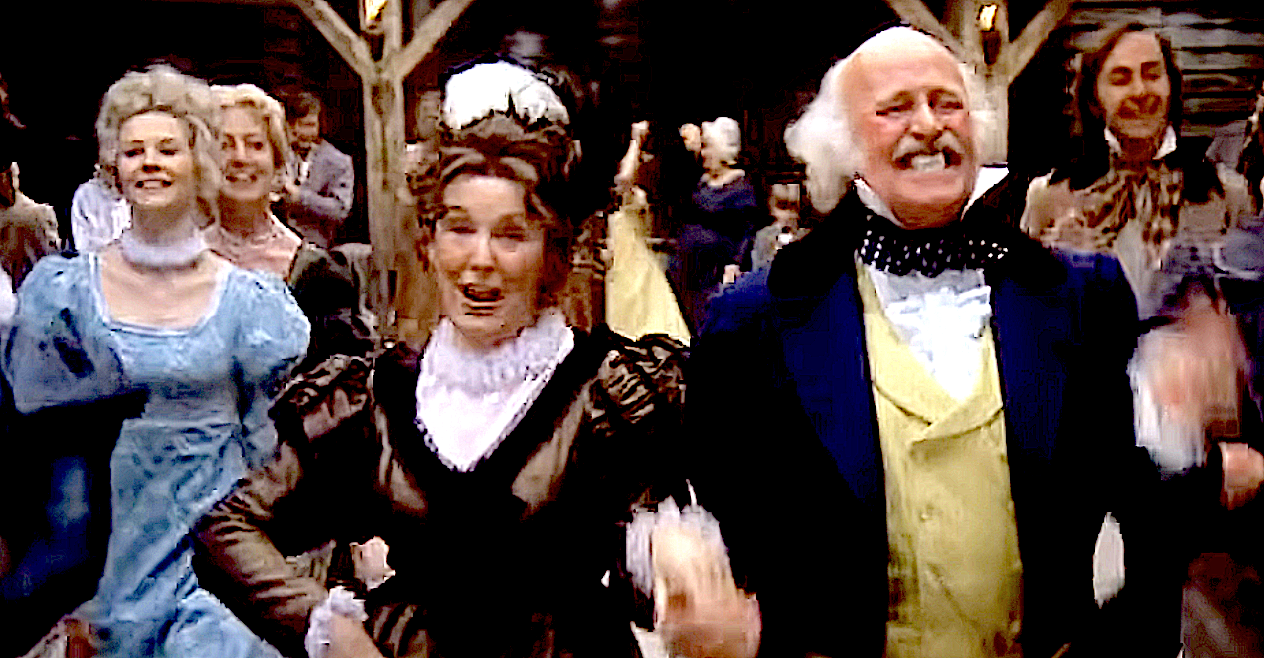
The Fezziwig from left, Suzanne Neve (Isabel), Kay Walsh (Mrs. Fezziwig), and Laurance Naismith (Mr. Fezziwig).
The versatile Anton Rodgers, not as well known in the United States as he is renowned in England, is given the biggest highlight of the entire production, “Thank You Very Much” in the role of soup vendor Tom Jenkins. “We used him in Pickwick so that’s why he was in Scrooge,” said Bricusse, “He played Alfred Jingle in Pickwick. He was brilliant. He had two showstoppers and he was an obvious choice. He was a good performer and became a very serious actor later in life.” American audiences might know Rodgers best from appearances on such TV series as The Prisoner and Upstairs Downstairs, or the film Dirty Rotten Scoundrels.
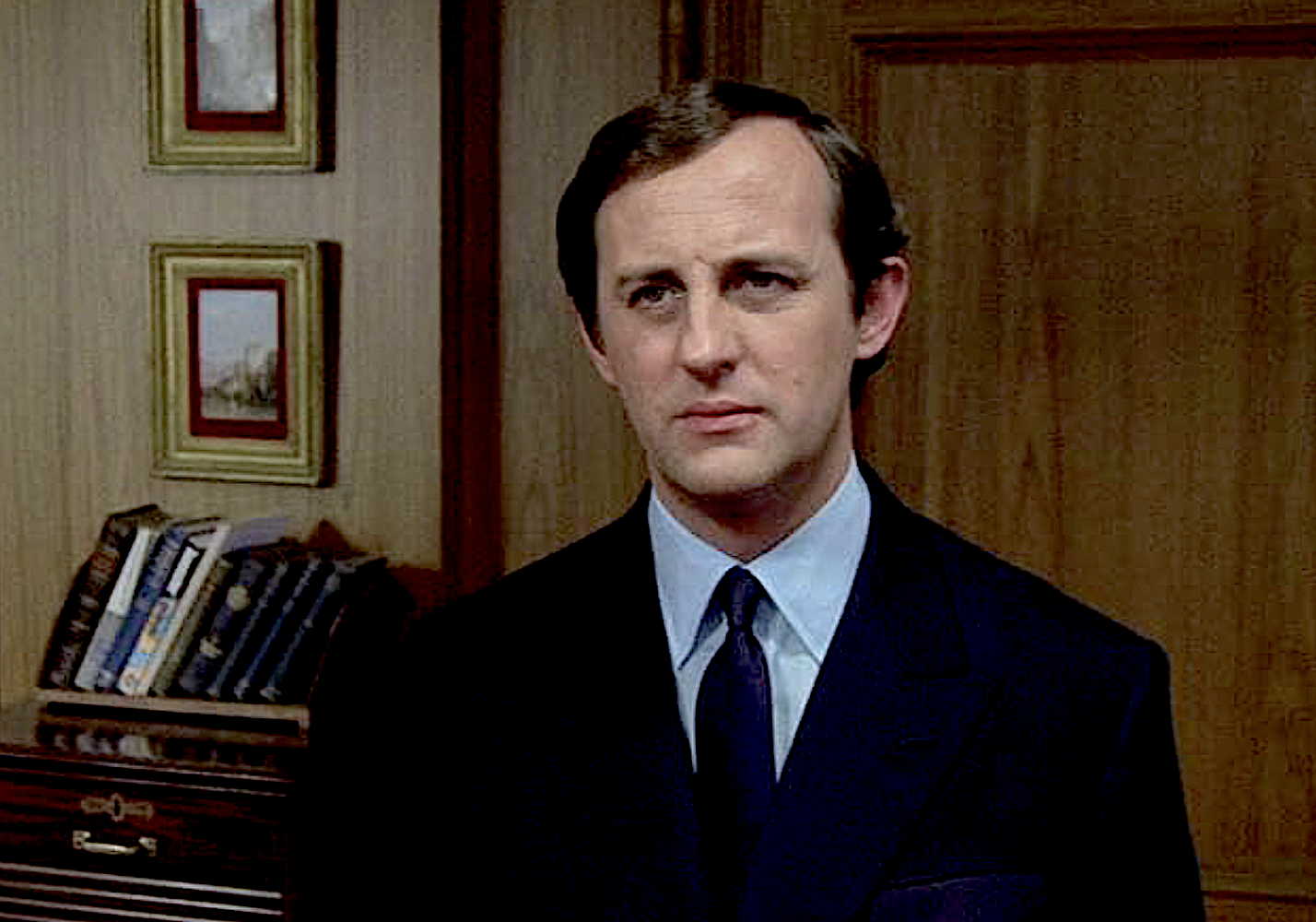
Multi-talented Anton Rodgers appeared in “The Man Who Haunted Himself,” starring Roger Moore, also released in 1970.
For the songs, Bricusse embarked on a creative process called “spotting,” through which the songwriter identifies the ideal places where the characters sing. The trick is to create songs that advance the plot and reveal character in ways better than dialogue. Each ghost was given a song except the last one. “He didn’t have one. He was too frightening,” said Bricusse of the Ghost of Christmas Yet to Come. “But I took Scrooge's love affair with Isabel, you know, that's very useful because there are all sorts of songs you can do with that. I had two songs for them, one where they meet and are happy and another one when she leaves him. [The first of these songs, “Happiness,” was originally written for the 1969 film, Goodbye Mr. Chips.] I knew what the two songs were going to be because the storyline is already there for me.
“The thing about show songs or film songs which is a great advantage for the writer, and the reason I don’t write pop songs, is that you’re given the context and you know the character of the person that's going to sing the song, so you are halfway there already. You know what they are going to say so you don’t have to look out of thin air for a hit song. You just sit and write the song that is appropriate to the context.”
Bricusse is justifiably pleased with how well the “Thank You Very Much” sequence worked, especially since it is so wickedly sarcastic in tone. “Well, I love the idea that they are all joyous because they’re thanking Scrooge for dying which was wonderful and perverse. I also love the very ending when the song is reprised, and you have the whole thing with the dancing in the square and out of the church.”
Working with Leslie Bricusse on the musical direction was Ian Fraser, who arranged and orchestrated the songs and score. Fraser had a long history with Bricusse and Anthony Newley dating back to their smash success on stage with Stop the World, I Want to Get Off. “Like Irving Berlin, Leslie could not read or write music,” Fraser explained when interviewed for Neame’s book. “[Leslie] would sing or play on a keyboard and I would write out the melody, harmonize it, and take it from there. Basically, I put the songs down on paper and hopefully made them sound good. There was a tremendous amount of music, and it didn’t stop very often.”
Neame confirmed this: “Anytime there was a problem with the music or lyrics, Fraser would receive revised material over the phone from Leslie.” (Bricusse had returned to America after a few weeks in England.) Assisting Fraser was Herbert W. Spencer.
“All the musical numbers were prerecorded for lip-synching to playback,” Neame explained. “In many instances [Finney] would want to dance around more than we had planned or if I wanted to extend a piece of music during a song and there wasn’t music for it. Fortunately [Fraser] was on the set most of the time and able to help.”
The only time Neame and Fraser encountered a departure from the usual playback and lip-sync approach was for Scrooge’s song “I’ll Begin Again,” where he awakens from his nightmare at the foot of his bed, realizes he is still alive, and joyously repents. “Albie [Albert Finney] said, ‘I can’t lip-sync this one. I’ve got to act it,’ Fraser recounted. “We decided to hardwire an earpiece under his wig, down his back, and out his gown. The wire went out of the picture and into the room where I was at the piano. We shot it live to my accompaniment. When I scored the picture, I added the orchestra to his voice. All this put more pressure on Ronnie because it had to be done in one shot. The result gave the song a wonderful presence, a feeling of ‘now.’”
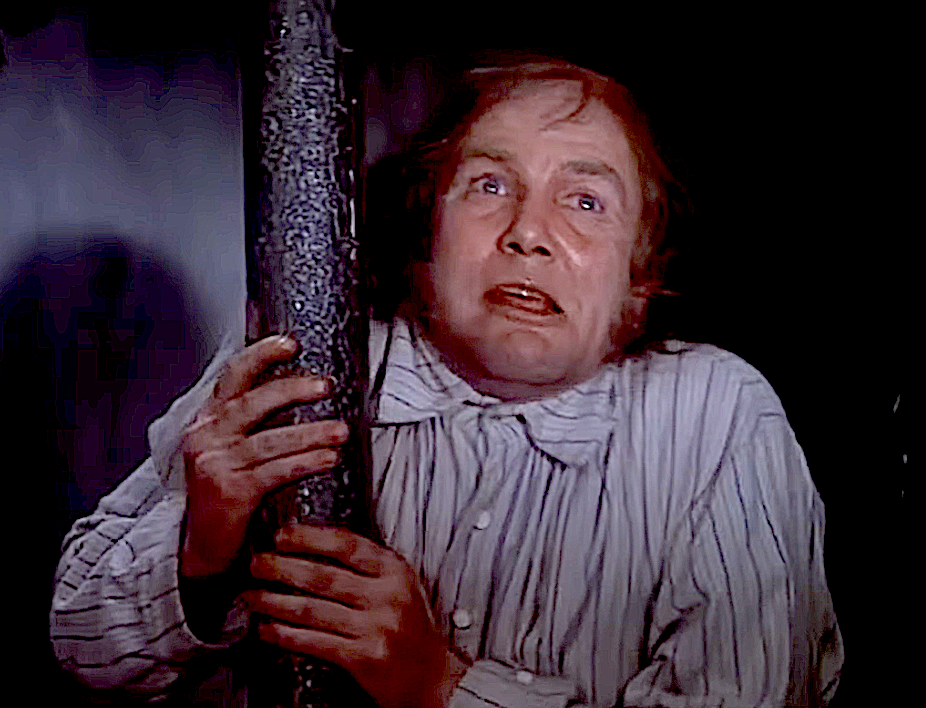
Albert Finney as Ebeneezer Scrooge sings Leslie Bricusse’s “Ill Begin Again.”